

 English
 français
 русский
 español
يبحث
ما الذي تبحث عنه?
يبحث

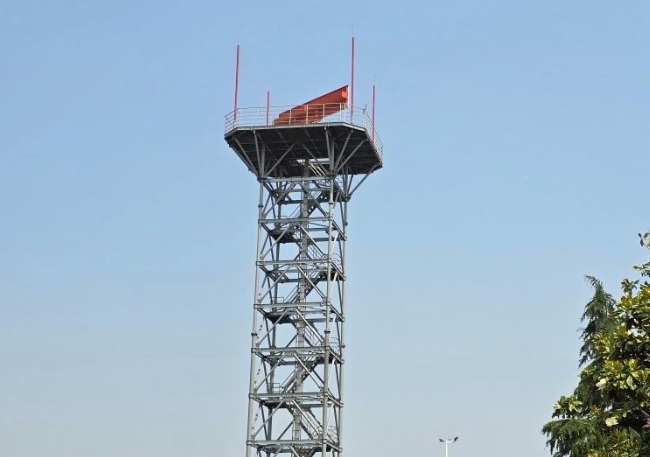
The structural requirements for an Air Traffic Control (ATC) radar tower are governed by the need to maintain absolute pointing accuracy for the radar antenna under all environmental and operational loads. Unlike standard telecom towers, an ATC radar tower must comply with rigorous standards such as ANSI/TIA-222-H/F/G, support massive concentrated equipment loads (pedestal and radome), maintain a high natural frequency (typically >1 Hz) to avoid resonant vibration, and limit structural deflection to fractions of a degree. These requirements dictate the use of high-stiffness steel lattice structures, precision-engineered platforms, and deep, moment-resisting foundations.
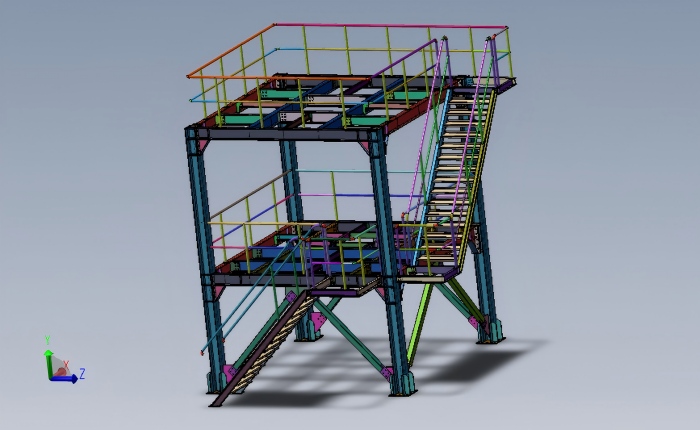
· Dynamic Stiffness Over Raw Strength: The tower must be stiff enough to prevent wind-induced sway and vibration from distorting the radar beam. Natural frequency requirements often dictate the structural design more than pure strength.
· Concentrated Heavy Loads: ATC radar systems, including the rotating pedestal and protective radome, impose massive, top-heavy loads that generate enormous overturning moments at the base.
· Precision Platform Interfaces: The antenna mounting platform must be heavily braced to act as a rigid diaphragm, ensuring the radar's sensitive servo system is not misaligned by structural flexing.
· Strict Deflection Limits: Structural drift and twist must be kept within strict tolerances (often fractions of a degree) to maintain target tracking accuracy.
· Comprehensive Environmental Design: Towers must be engineered for site-specific wind (up to 350 km/h 3-second gust), ice, and seismic loads, with robust hot-dip galvanizing for long-term corrosion protection.
An ATC radar tower is a piece of critical infrastructure. Its failure would directly compromise aviation safety. Consequently, the structural design must adhere to strict international and local building codes.
The primary standard for antenna-supporting structures is ANSI/TIA-222-H. This standard dictates the methodology for calculating wind loads, ice loads, and seismic activity. For ATC radar towers, the design must often account for extreme wind events, with structural engineers calculating loads based on 3-second gust wind speeds that can reach up to 350 km/h depending on the geographic location and risk category.
Furthermore, because radar towers are tall, slender structures sensitive to dynamic effects, engineers must perform a second-order elastic analysis to account for the P-Delta effect (the amplification of bending moments due to the displacement of the tower).
Altai Tower's Engineering Approach:
To meet these stringent safety requirements, Altai Tower utilizes advanced structural analysis software, including MS Tower, ASM Tower, PLS Tower, and SAP2000. These tools allow our engineers to simulate complex load combinations, ensuring that every tower is optimized for safety and material efficiency before fabrication begins.
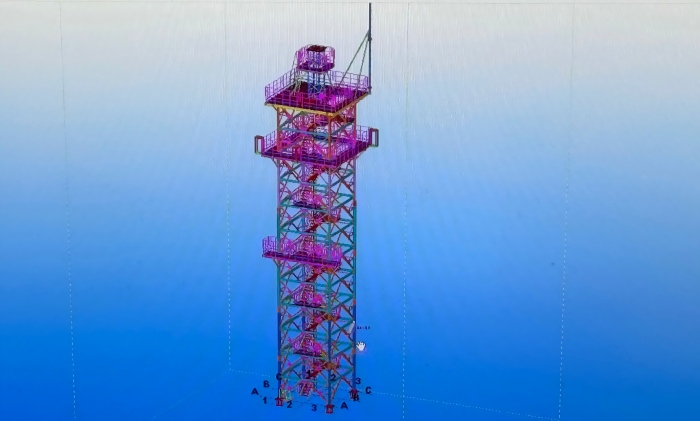
The most defining characteristic of a radar tower is the equipment it carries. An ATC radar system—such as the ASR-11—is not a lightweight telecom antenna; it is a massive mechanical system.
· Dead Load (Weight): The radar system includes a heavy rotating pedestal, a large parabolic antenna, and a protective radome. These components can weigh several tons and are concentrated at the very top of the tower.
· Wind Area: The radome presents a large, solid surface area to the wind. An 11-meter diameter radome can present over 100 square meters of projected area. When wind strikes this surface at the top of a 30-meter tower, it creates an enormous overturning moment at the base.
· Dynamic Loads: The continuous rotation of the antenna introduces cyclic loading and potential vibration, which must be accounted for in the fatigue design of the steel members and bolted connections.
The tower structure must be designed to safely transfer these massive vertical and lateral loads down to the foundation. Consequently, ATC radar towers typically utilize high-stiffness lattice configurations with heavy leg sections to resist these extreme forces.
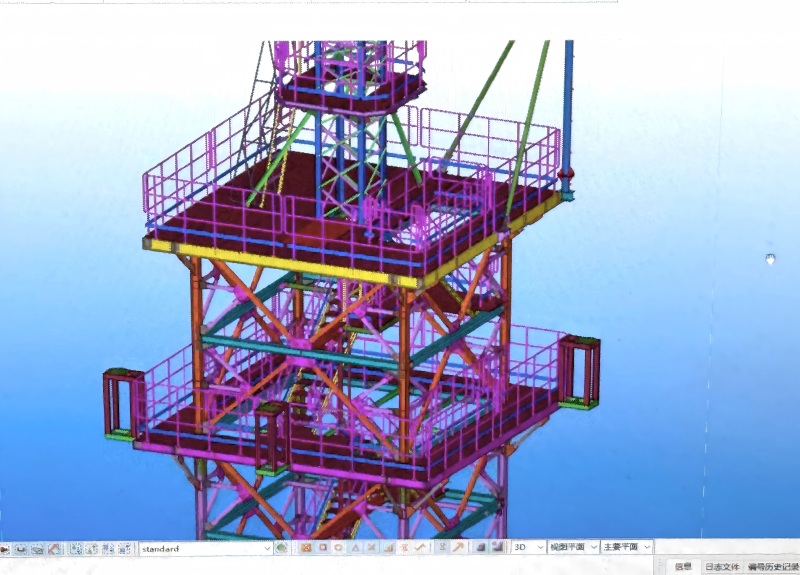
This is the most critical technical distinction between a telecom tower and an ATC radar tower. A telecom tower can sway slightly without affecting signal coverage. A radar tower cannot sway or vibrate without degrading data fidelity.
ATC radar systems require a highly stable platform for two main reasons:
· Servo System Accuracy: Radar antennas use precision servo systems to track targets. If the tower flexes under wind load, the servo system must work harder to compensate, potentially introducing tracking errors.
· Resonance Avoidance: If the natural frequency of the tower matches the rotational frequency of the radar antenna or the frequency of wind vortex shedding, the tower will experience resonance—a dangerous amplification of vibration.
Structural Requirements for Stability:
· High Natural Frequency: Industry standards and radar manufacturers typically require the supporting structure to have a natural frequency of not less than 1 Hz, or at least three times the radar servo bandwidth (e.g., if the servo bandwidth is 0.3 Hz, the tower frequency must be >1 Hz).
· Rigid Diaphragm Platforms: The antenna mounting platform cannot be a simple frame. It must be heavily cross-braced to act as a rigid horizontal diaphragm, distributing the concentrated weight of the radar and preventing localized torsional flexing.
· Strict Deflection Limits: Under operational wind loads, the structural drift and twist at the antenna level must be kept to fractions of a degree to ensure the radar beam remains on target.
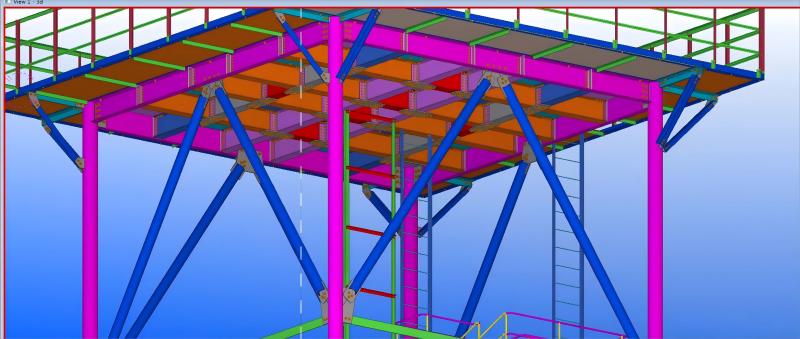
The theoretical design of a radar tower is only as good as its fabrication. Because the radar pedestal is a precision-machined component, the steel platform it mounts to must be equally precise.
Hole Alignment: The bolt holes on the tower's top platform must perfectly match the radar pedestal's base flange. Any misalignment can introduce structural eccentricities or prevent installation entirely.
Weld Quality: All critical welds must be inspected via Non-Destructive Testing (NDT) to ensure they can withstand the dynamic, cyclic loads of the rotating antenna.
Altai Tower's Manufacturing Capabilities:
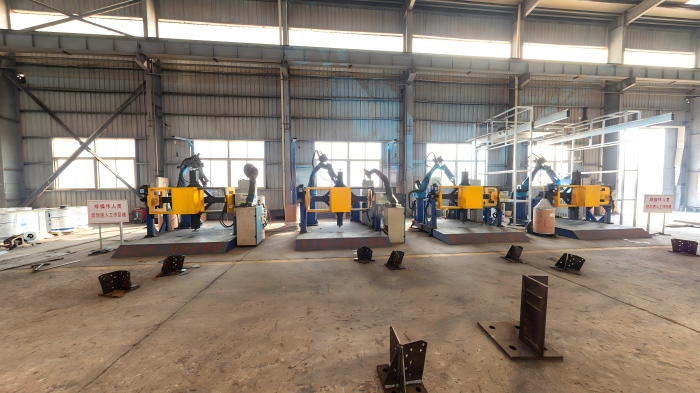
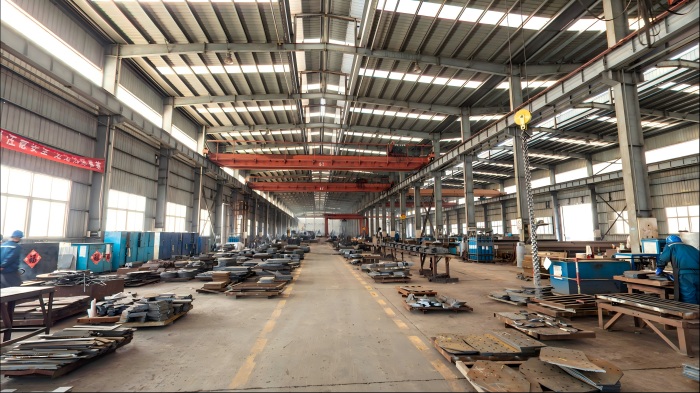
At Altai Tower, we ensure fabrication precision through our advanced production line. Our factory is equipped with high-power CNC laser cutting machines capable of drilling and cutting steel with an error margin of just 0.05 mm. For heavy structural components, we utilize a 4000-ton hydraulic CNC bending machine to achieve exact angles, and our intelligent welding robots ensure uniform, deep-penetration welds that meet the highest structural standards.
ATC radar towers are often located in coastal areas, on mountain peaks, or in open plains where they are constantly exposed to the elements. Corrosion not only weakens the steel but also compromises the tower's dynamic properties.
To ensure a 30-to-50-year service life, the steel structure must undergo hot-dip galvanizing in accordance with standards such as ASTM A123, providing a minimum zinc coating thickness of 85 to 100 μm.
Altai Tower's Anti-Corrosion Solution:
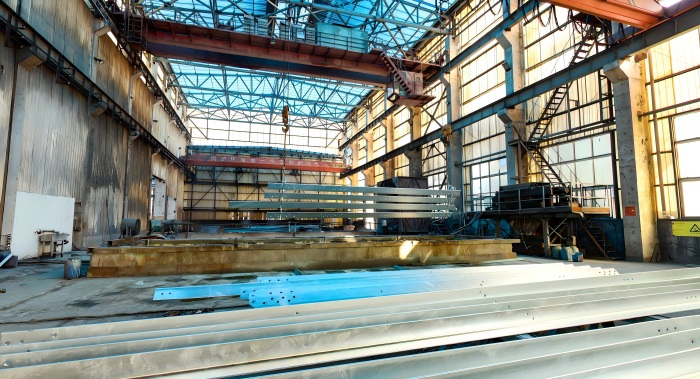
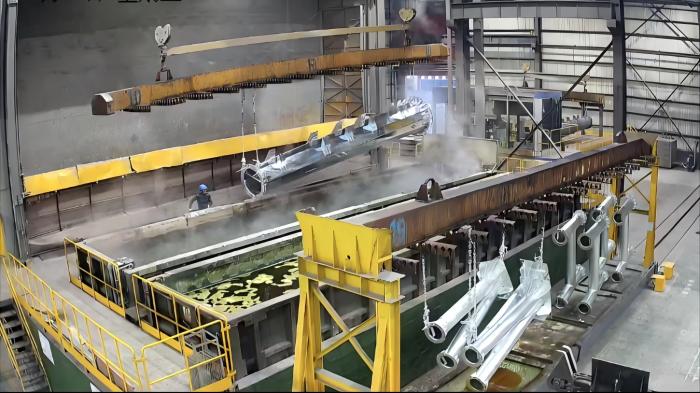
Altai Tower operates a fully automated hot-dip galvanizing workshop. This provides our radar towers with a durable protective layer against moisture, salt spray, and industrial pollutants, ensuring that the structural integrity and stiffness of the tower are maintained for decades.
When engineering a 30-meter radar tower for critical surveillance, Altai Tower integrates these structural requirements from the ground up.
Structural Configuration: A high-stiffness, four-legged lattice design is selected to provide the necessary torsional rigidity and achieve the required natural frequency.
Platform Design: The top platform is designed as a heavy-duty, fully bolted diaphragm with CNC-drilled mounting holes to interface directly with the radar pedestal.
Foundation: A deep reinforced concrete foundation (often utilizing piles) is designed to resist the massive overturning moment generated by the radome's wind area, ensuring the tower does not tilt.
Quality Assurance: Every component is trial-assembled at our factory before shipment to guarantee that the thousands of bolted connections align perfectly on site, minimizing installation time and ensuring structural integrity.
Q1: Can a standard telecom tower be used to support an ATC radar?
A: In almost all cases, no. Standard telecom towers are designed for relatively light, distributed loads and do not possess the structural stiffness required to meet the strict natural frequency (>1 Hz) and deflection limits of a radar system. Mounting a radar on a standard tower will likely result in data degradation due to structural vibration.
Q2: What is the most critical load case for an ATC radar tower?
A: While the dead weight of the radar is significant, the overturning moment generated by wind load acting on the radome is often the governing load case for the tower's legs and foundation. The tower must be designed to resist this massive lateral force without excessive deflection.
Q3: How does the rotating radar antenna affect the tower?
A: The continuous rotation of a heavy antenna creates cyclic dynamic loads. The tower must be stiff enough that its natural frequency is well separated from the antenna's rotational frequency (and its harmonics) to avoid resonant amplification, which could lead to rapid fatigue and structural failure.
Q4: What level of fabrication precision is required for the antenna platform?
A: The platform must be fabricated with sub-millimeter precision. The bolt pattern for the radar pedestal is typically match-drilled or CNC-punched to ensure perfect alignment. Field modifications (like reaming holes) are generally not permitted on critical radar interfaces as they can compromise the connection.
Q5: How does Altai Tower ensure the tower meets the required natural frequency?
A: During the design phase, our engineers use advanced Finite Element Analysis (FEA) software (like SAP2000) to model the tower and equipment. We calculate the tower's modal frequencies and adjust member sizes and bracing configurations until the natural frequency safely exceeds the radar manufacturer's requirements.
The structural requirements for an ATC radar tower are fundamentally different from those of standard communication structures. They demand a precise balance of high stiffness, dynamic stability, and heavy-load capacity, all verified against rigorous international standards like TIA-222-H.
At Altai Tower, we combine advanced engineering analysis with high-precision manufacturing to deliver radar support structures that meet these exacting demands. Whether you are integrating an ASR-11 system or a specialized defense radar, our team is equipped to handle the complex structural calculations and fabrication challenges required.
Ready to discuss your radar tower project?
Provide our engineering team with your radar equipment specifications (weight, dimensions, and servo bandwidth) and your site location. We will deliver a custom structural design and a detailed proposal that guarantees performance and reliability.
· ANSI/TIA-222-H: Structural Standard for Antenna Supporting Structures and Antennas.
· GB 51418-2020: General Radar Station Design Standard (China), providing criteria for natural frequency and servo bandwidth separation.
· Altai Tower Engineering Data: Internal structural analysis software capabilities (SAP2000, MS Tower) and CNC manufacturing tolerances (0.05mm).



 شبكة IPv6 مدعومة