

 English
 français
 русский
 español
يبحث
ما الذي تبحث عنه?
يبحث
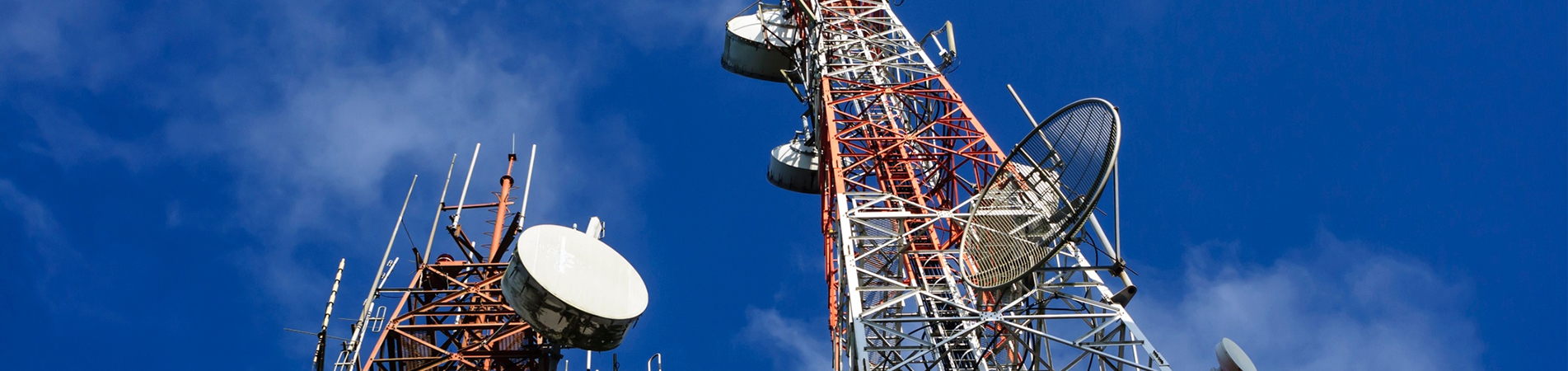
في عالم البنية التحتية الرادارية الحيوية، الدقة هي كل شيء. تتطلب أنظمة الرادار الحديثة - سواءً كانت للمراقبة الجوية أو مراقبة الحركة الجوية أو الدفاع - منصة مستقرة للغاية. حتى أدنى اهتزازات هيكلية أو تمايل في برج الرادار قد تُسبب هذه الأبراج أخطاءً في الطور، وتشويهًا في أنماط الإشعاع، وتدهورًا في جودة البيانات [7+L9-L12]. ومع ذلك، يجب أن تكون هذه الأبراج نفسها قابلة للوصول. يحتاج الفنيون إلى تسلقها بانتظام لإجراء المعايرة وصيانة الهوائيات والإصلاحات الطارئة. يكمن التحدي في دمج هذه الأبراج. أنظمة ومعدات تسلق آمنة داخل الغلاف الهيكلي للبرج دون المساس بالصلابة التي تتطلبها دقة الرادار.
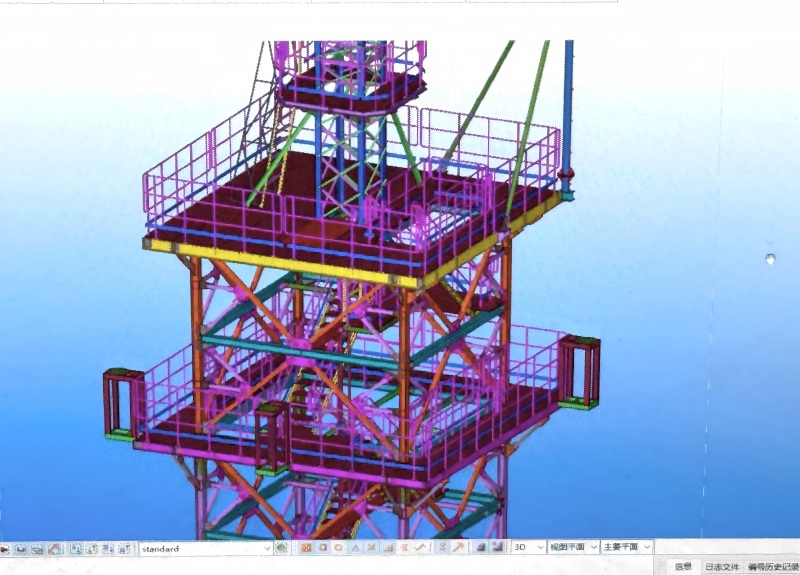
تخضع هياكل دعم الرادار لمتطلبات ديناميكية صارمة. يجب الحفاظ على التردد الطبيعي للبرج مرتفعًا بدرجة كافية، وفصله جيدًا عن ترددات التشويش الناتجة عن الهوائي الدوار وأحمال الرياح المحيطة، لتجنب التداخل الرنيني الذي قد يشوه صور الرادار. كل مكون إضافي - كدرجة سلم، أو دعامة منصة، أو موجه كابل - يُغير توزيع كتلة الهيكل وصلابته. قد تُؤدي عناصر الوصول المصممة بشكل سيئ إلى مرونة موضعية أو زيادة الكتلة في مواقع تُخفض الترددات الطبيعية الحرجة.
لا يُصمَّم برج الرادار لتحمُّل الوزن فحسب، بل لمقاومة التشوه تحت الأحمال الديناميكية بصلابة استثنائية. فالتردد الطبيعي دالةٌ للصلابة والكتلة. وبالنسبة لهوائيات الرادار الثقيلة وأغطية الرادار، غالبًا ما يكون تقليل الكتلة غير عملي، لذا فإن العامل الأساسي هو زيادة الصلابة الهيكلية إلى أقصى حد. ولذلك، يجب دمج ميزات الوصول في المنطق الهيكلي الأساسي للبرج بدلًا من اعتبارها إضافات لاحقة.
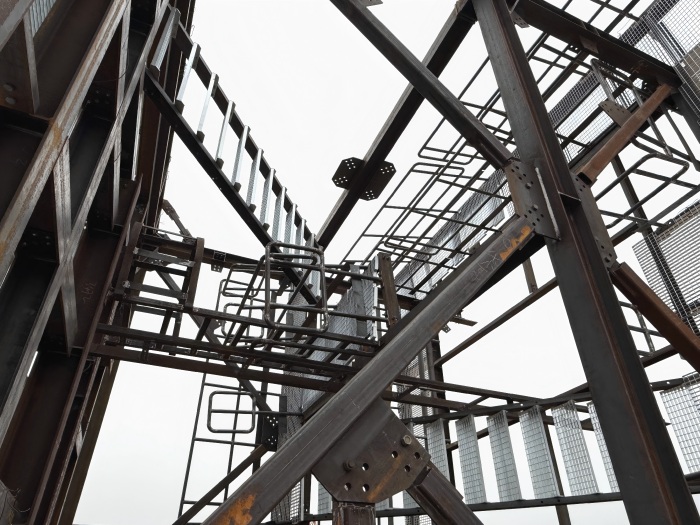
يجب أن تلتزم أبراج الرادار بمعايير السلامة التي تتطور نحو توفير حماية أكثر فعالية من السقوط. ANSI/ASSE A10.48 يُقدّم هذا المعيار إرشادات سلامة شاملة لهياكل الاتصالات، بما في ذلك الهوائيات والهياكل الداعمة لها، ويشمل الحماية من السقوط والإنقاذ، ومرافق التسلق، والتدريب. وقد حدّثت النسخة المُعدّلة من هذا المعيار لعام 2023، والتي دخلت حيز التنفيذ في 1 يناير، ممارسات السلامة الخاصة بالبناء والهدم والتعديل والصيانة.
تُلزم لوائح إدارة السلامة والصحة المهنية (OSHA) بتوفير حماية كاملة من السقوط للعاملين على ارتفاعات تزيد عن 6 أقدام. أما بالنسبة للسلالم الثابتة التي يزيد ارتفاعها عن 24 قدمًا، فقد تغير التوجه التنظيمي بشكل حاسم: حيث يجري التخلص التدريجي من أقفاص السلالم، مع الموعد النهائي 2036 لاستبدالها في المنشآت الجديدة والتعديلات الرئيسية. لا تمنع الأقفاص السقوط العمودي وتزيد من صعوبة عمليات الإنقاذ، مما يجعل الأنظمة الحديثة القائمة على الكابلات أو القضبان هي الحل المفضل.
بالنسبة لأبراج الرادار، لا تتساوى جميع حلول السلامة أثناء التسلق. أصبحت أنظمة الكابلات والسكك الحديدية العمودية هي المعيار الصناعي لأنها توفر تثبيتًا مستمرًا دون الحاجة إلى فصل المستخدم عند نقاط وسيطة. أنظمة منع السقوط FABA™ تتيح هذه السلالم إمكانية التسلق الآمن على السلالم الرأسية الثابتة على أي ارتفاع في الأبراج والصواري والأعمدة. نظام stopcable® يتميز هذا المنتج بنظام مانع سقوط قابل للفصل مزود بامتصاص مدمج للطاقة، والذي يُقفل فورًا على الكابل عند السقوط، مما يقلل مسافة السقوط الحر. من إنتاج شركة MSA Safety. أنظمة Latchways® يشتمل كل من (LadderLatch و TowerLatch) على مكون عجلة نجمية حاصل على براءة اختراع يتيح حركة سلسة عبر موجهات الكابلات دون سحب الكابل من الموجهات.
| نوع النظام | آلية الحماية من السقوط | ملاءمة لأبراج الرادار |
|---|---|---|
| سلم ثابت (بدون حماية) | لا شيء - يعتمد على التلامس ثلاثي النقاط | غير مقبول - لا يلتزم بالمتطلبات التنظيمية |
| سلم مع قفص | يمنع الحاجز المادي السقوط الجانبي | تم إيقاف استخدامها تدريجياً - فهي لا تمنع السقوط العمودي؛ مما يعقد عملية الإنقاذ |
| نظام الكابلات/السكك الحديدية العمودي | ينزلق مانع السقوط المثبت على حزام الأمان على الكابل/السكك الحديدية | موصى به - يوقف السقوط في غضون بوصات؛ تسلق بدون استخدام اليدين؛ تأثير صلابة ضئيل |
| نظام منع السقوط الشخصي (PFAS) | حزام أمان وحبل أمان متصلان بنقطة التثبيت | نظام تسلق إضافي - مناسب للعمل على المنصات ولكنه ليس نظام تسلق أساسي |
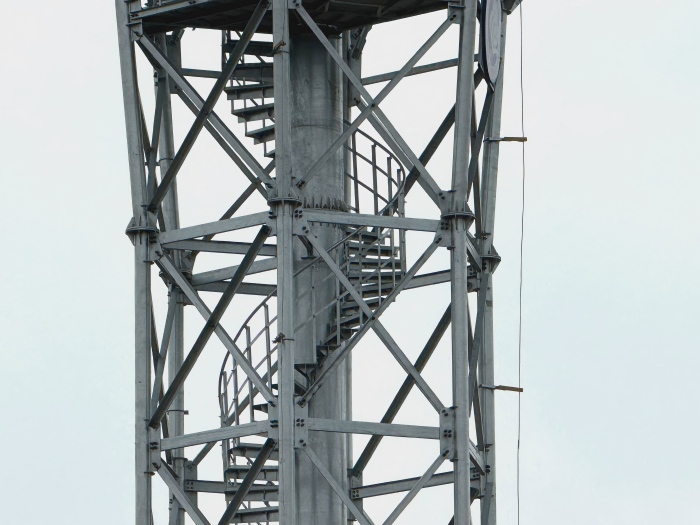
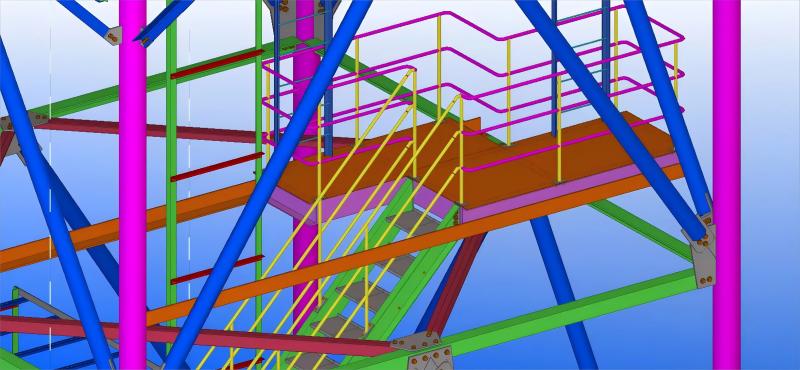
تتضمن أبراج الرادار عادةً منصات متعددة: منصة سفلية للوصول إلى المعدات ومنصة علوية عند مستوى قبة الرادار لتركيب الهوائيات. تُستخدم هذه المنصات كمناطق عمل للصيانة وتوفر نقاط تثبيت للمعدات المساعدة. من الناحية الهيكلية، ينبغي دمجها كـ أغشية متصلبة —يجب أن تساهم عوارض الأرضية ودعاماتها بشكل إيجابي في الصلابة العامة للبرج.
مبادئ التصميم الأساسية للمنصات في تطبيقات الرادار:
· تدعيم محيطي كامل: ينبغي ربط المنصات بجميع واجهات الأبراج باستخدام دعامات متقاطعة أو أرضيات مُقوّاة لتعمل كحلقات تقوية أفقية. هذا يمنع حدوث أنماط اهتزاز محلية قد تُقلل من الترددات الطبيعية.
نقل الأحمال: يجب نقل أحمال المنصة إلى أرجل البرج عبر نقاط توصيل مخصصة، وليس من خلال الدعامات القطرية فقط. وهذا يضمن مسارات قوى يمكن التنبؤ بها ويتجنب تركيزات الإجهاد غير المقصودة.
· شبكة فولاذية مفتوحة: يُفضّل هذا النوع من الألواح على الألواح الصلبة لأنه يقلل من تراكم أحمال الرياح، ويُحسّن الفحص البصري للعناصر الموجودة أسفلها، ويُسهّل إزالة الجليد. كما يُقلّل التصميم المفتوح من الكتلة المضافة، مما يدعم هدف زيادة نسبة الصلابة إلى الوزن.
يتم تحليل أنماط التدعيم المتقدمة، مثل التدعيم على شكل حرف K أو التدعيم على شكل حرف X، وتحسينها لضمان منصة صلبة ومتينة تقلل من الانحراف تحت أحمال التشغيل. كما تعمل المنصات أيضًا كـ مناطق تجميع عمليات الإنقاذ — نقاط استراحة مطلوبة على السلالم الطويلة، عادة كل 9 إلى 12 مترًا — حيث يمكن للعامل أن يستريح أو ينتظر المساعدة.
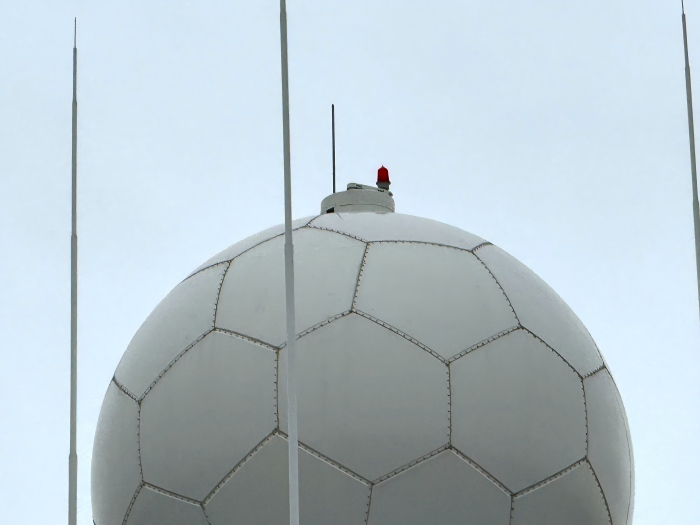
غالبًا ما تُقام أبراج الرادار في مواقع مكشوفة، مما يجعل الحماية من الصواعق أمرًا بالغ الأهمية. يجب دمج أنظمة ومنصات التسلق في البرج مع نظام الحماية الخارجي من الصواعق. وفقًا لتوصية ITU-T K.112، يتضمن نظام الحماية من الصواعق لمحطة قاعدة الراديو إنهاءً هوائيًا، وموصلات هبوط، وشبكة تأريض، وموصلات ربط، وأجهزة حماية من زيادة التيار. يجب ربط جميع مكونات الوصول المعدنية - السلالم، ودرابزينات المنصات، وموجهات الكابلات - بنظام التأريض لمنع حدوث ومضات جانبية خطيرة. يعمل البرج الفولاذي نفسه كموصل هبوط رئيسي، ولكن يجب التحقق من استمرارية التأريض لجميع أجهزة الوصول المتصلة به. ينبغي استخدام حديد التسليح في أساسات البرج الخرسانية لتعزيز نظام التأريض، ونقل طاقة الصاعقة عبر الخرسانة الموصلة.
لا تُعدّ أنظمة الوصول في أبراج الرادار إضافات هامشية، بل هي جزء لا يتجزأ من قدرة البرج على الصيانة والمعايرة، وفي نهاية المطاف، على أداء مهمته الدقيقة. فعند دمجها بشكل صحيح، تُمكّن أنظمة التسلق الآمنة ومنصات المعدات البرج من أن يكون... سهل الوصول إليه ودقيق توفر أنظمة منع السقوط بالكابلات الرأسية حماية مستمرة دون المساس بالصلابة. وتساهم المنصات المصممة كأغشية مقواة بشكل إيجابي في الأداء الديناميكي للبرج. كما تضمن الحماية الشاملة من الصواعق سلامة الأفراد أثناء التسلق في الظروف المكشوفة. بالنسبة للهياكل التي قد يؤدي فيها انحراف بسيط للهوائي إلى عدم موثوقية بيانات الرادار، فإن هذا التكامل ليس اختيارياً، بل هو أساسي.
هل أنت مستعد لدمج أنظمة دخول آمنة وعالية الدقة في مشروع برجك القادم؟ تواصل مع فريقنا الهندسي اليوم للحصول على دعم تصميم مخصص وعرض أسعار مفصل.



 شبكة IPv6 مدعومة